
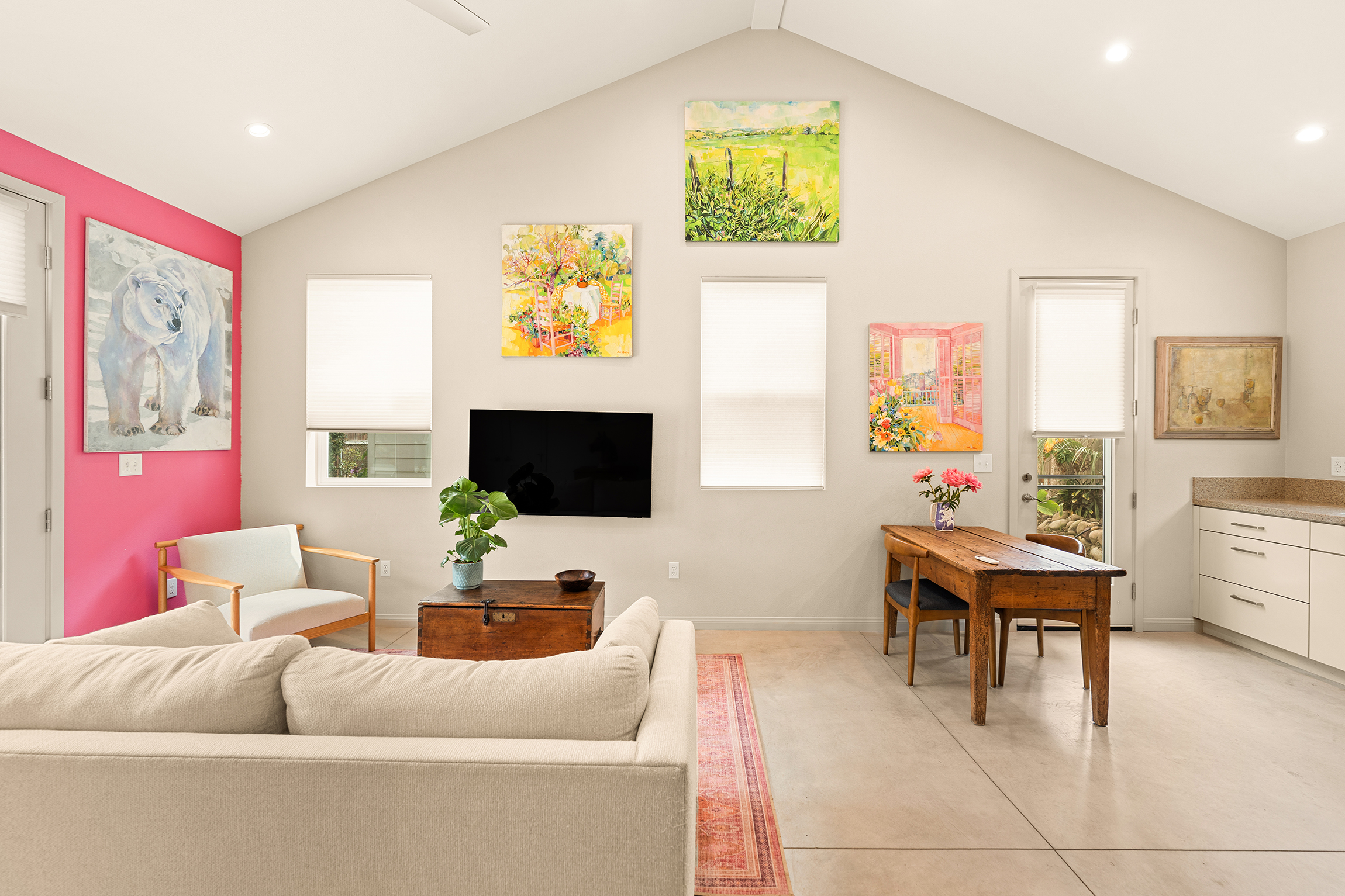
When people think about creating more room on their property, the conversation often starts with square footage. It’s easy to assume that a larger building automatically provides a better living experience. In reality, the quality of a space is often determined less by its size and more by how thoughtfully it is designed.
This is especially true for Accessory Dwelling Units (ADUs), where every square foot matters.
Good architecture has the ability to make a modest space feel open, functional, comfortable, and connected to its surroundings. Through thoughtful planning and design, even a relatively small ADU can feel surprisingly spacious and inviting.
Space Is About More Than Size
A room’s dimensions tell only part of the story. Factors such as natural light, ceiling height, sightlines, and the relationship between indoor and outdoor spaces can dramatically influence how large a space feels.
For example, a carefully placed window can draw the eye toward a garden or distant view, making a room feel much larger than its actual footprint. Similarly, higher ceilings or vaulted rooflines can create a sense of openness without increasing the building’s square footage.
These design strategies often have a greater impact on the experience of a space than adding additional square footage alone.
Thoughtful Layouts Create Better Functionality
In smaller homes and ADUs, every area must work hard. A well-designed floor plan considers how people move through the space, where natural gathering areas occur, and how daily activities are accommodated.
Thoughtful layouts eliminate unnecessary circulation space and focus on creating rooms that serve multiple functions without feeling cramped.
Rather than simply fitting rooms into a building, architectural design seeks to understand how a space will actually be used and organizes the layout accordingly.
Natural Light Changes Everything
One of the most effective ways to transform a small space is through natural light.
Well-positioned windows, doors, and skylights can make interiors feel brighter, more welcoming, and more expansive. Access to daylight can also improve comfort throughout the day while creating a stronger connection to the surrounding environment.
In Ventura County, where the climate supports indoor-outdoor living for much of the year, natural light often becomes one of the defining features of a successful ADU design.
Connecting Indoor and Outdoor Living
Small spaces can feel significantly larger when they extend beyond their walls.
Patios, courtyards, gardens, and covered outdoor areas create additional places to gather, relax, and enjoy the property. Large openings between indoor and outdoor spaces can help blur the boundary between the two, making the home feel more expansive.
Rather than viewing outdoor areas as separate from the building, thoughtful architecture considers them part of the overall living experience.
Storage Matters More Than You Think
Clutter can quickly make a small space feel crowded. For this reason, storage is often one of the most important design considerations in an ADU.
Built-in storage, efficient cabinetry, multi-purpose furniture, and thoughtful organization strategies can help maximize functionality without sacrificing comfort or aesthetics.
When storage is incorporated into the design from the beginning, a space can feel cleaner, more organized, and more enjoyable to live in.
Designing for the Site
Some of the most successful ADUs feel larger because they respond directly to their surroundings.
Views, sunlight, privacy, existing trees, and landscape features can all influence how a building is positioned and designed. By working with the natural characteristics of a site, architecture can create a stronger sense of openness and connection.
A thoughtfully sited ADU often feels more comfortable and spacious than one that simply maximizes square footage without considering its environment.
Small Spaces Can Have a Big Impact
A smaller home does not have to mean sacrificing comfort, beauty, or functionality. In many cases, thoughtful design can create a living experience that feels every bit as enjoyable as a much larger space.
Architecture is ultimately about making the most of what is available—whether that is a large property or a compact footprint. Through careful planning, attention to detail, and a deep understanding of how people use space, even a modest ADU can become a place that feels open, welcoming, and uniquely connected to its surroundings.
For homeowners considering an ADU in Ventura County, the goal is often not simply to build more space, but to create a space that feels meaningful, functional, and designed to enhance the property as a whole.